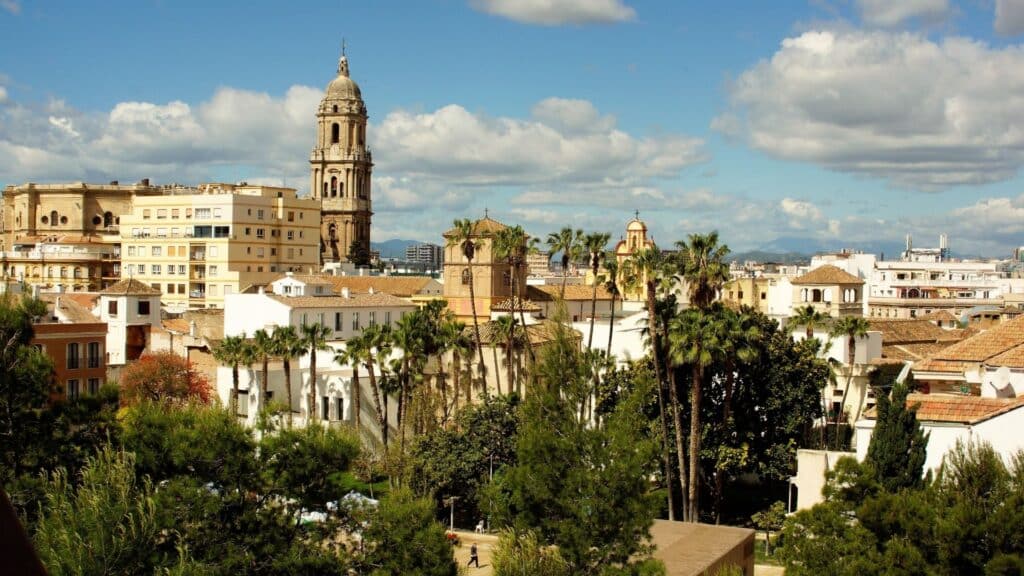
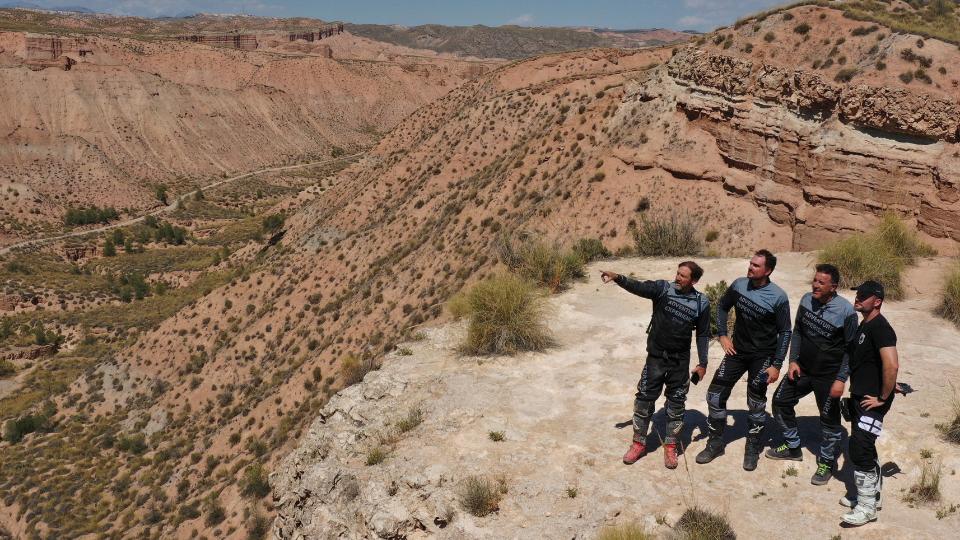
On a motorcycle journey through Morocco, you travel across a land of contrasts where each stage offers something completely different. From the north, with cities like Tangier, where the sea, history, and culture blend together, to the blue magic of Chefchaouen, nestled in the Rif Mountains.
Table of Contents
Contrasts and Colors of Morocco
Morocco is a constant interplay of contrasts that awaken the senses from the very first moment.
From the infinite golden desert, where sunlight paints the dunes in warm, shifting tones, to the intense greens of oases that emerge in the middle of nowhere.
The Atlas Mountains rise with ochre and reddish hues and snow-capped peaks, while in the medinas chaos comes alive in deep blues, vibrant spices, and fabrics that seem to tell their own stories.
Each destination is a different universe, a unique palette that transforms the journey into a succession of scenes as diverse as they are unforgettable, and we have the pleasure of experiencing them all.
View the guided Morocco tour →
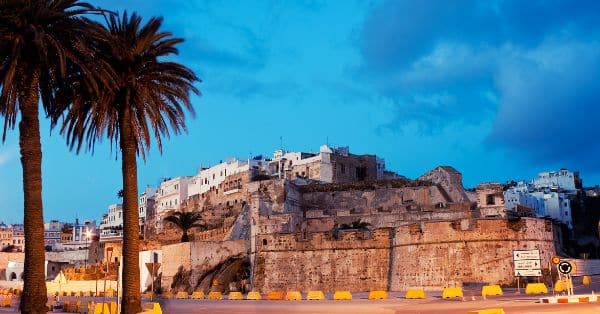
Tangier, the Bride of the North
Our journey begins in the African city closest to Europe: Tangier. A city considered one of the most cosmopolitan in Morocco due to its past as an “international city” administered by several nations, and as the country’s second economic hub.
Tangier is a place where history, myth, and culture intertwine by the sea. Landmarks such as the Caves of Hercules, whose opening resembles the African continent, are tied to the legend of Hercules and the origin of the Strait of Gibraltar.
Its diverse essence is reflected in the mix of languages and in iconic spots like Café Hafa, overlooking the sea and steeped in a bohemian past.
Its medina, influenced by Andalusian heritage, completes its character, summarizing centuries of cultural exchange.
Chefchaouen, the Blue Pearl
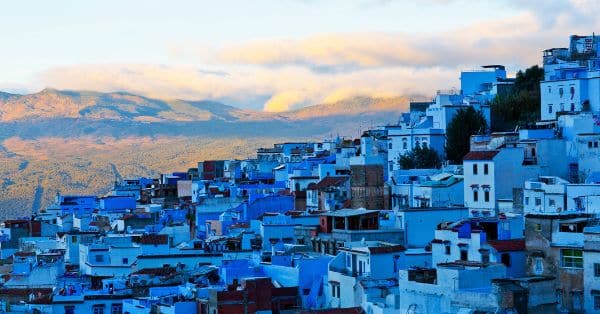
It is one of those places that feel almost unreal.
Founded in 1471 as a fortress in the Rif Mountains, its history is marked by the coexistence of cultures, having welcomed Muslims and Jews from the Iberian Peninsula, something still reflected in its Andalusian architecture.
Its distinctive blue color, introduced centuries ago, paints streets and facades, creating a unique atmosphere often associated with spirituality and tranquility. But why blue?
In the 1930s, the Sephardic Jewish community that settled in the city began painting their houses blue, associating the color with the sky, divinity, and concepts such as peace and freedom.
Additionally, the mixture of lime and indigo is believed to help keep homes cooler and repel insects during the hot summers.
Over time, this feature became the city’s visual identity, attracting photographers and travelers from around the world, leading locals to constantly repaint façades to preserve its iconic image.
Fez, the Spiritual Capital of Morocco
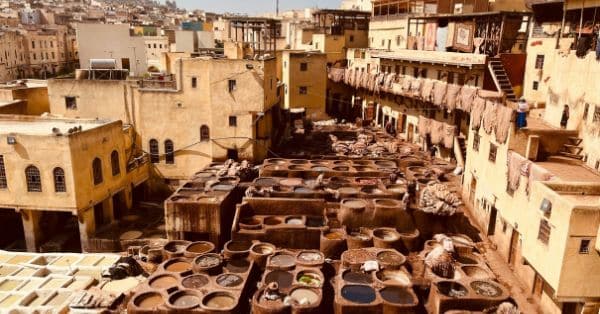
Fez, known as the spiritual capital of Morocco, is home to one of the largest and oldest medinas in the world: Fes el-Bali. It is a true labyrinth of more than 9,000 alleyways where cars cannot circulate, and daily life relies on donkeys and mules for transporting goods.
Its narrow streets are filled with artisan workshops, communal ovens, mosques, and specialized souks organized by trade, maintaining a social structure that has barely changed for centuries.
It is also home to one of the great milestones in the history of knowledge: the University of al-Qarawiyyin, founded in 859 by Fatima al-Fihri, considered the oldest continuously operating university in the world.
Erfoud, the Gateway to the Sahara
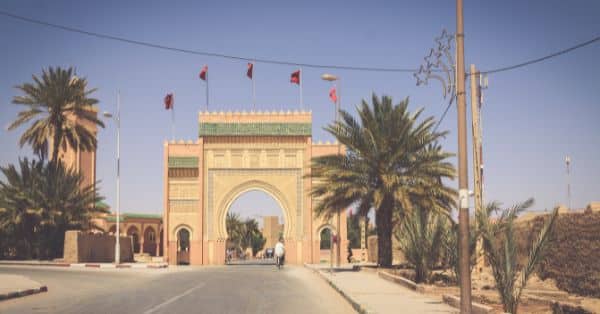
Erfoud, known as the “Gateway to the Sahara,” is a unique city in southeastern Morocco that completely breaks with the country’s traditional aesthetic. Founded during the French colonial period, it has no medina or labyrinthine layout, but rather straight, functional streets reflecting its origin as a military base.
Erfoud is also the threshold to one of North Africa’s most breathtaking landscapes: the Sahara Desert. As you leave the city and the Tafilalet palm grove behind, the environment transforms into an endless expanse of sand, light, and silence.
In this extreme landscape, time seems to dissolve: the heat of the day contrasts with cold nights under a sky filled with stars, creating a sense of total disconnection and raw nature.
Merzouga, the Heart of the Desert
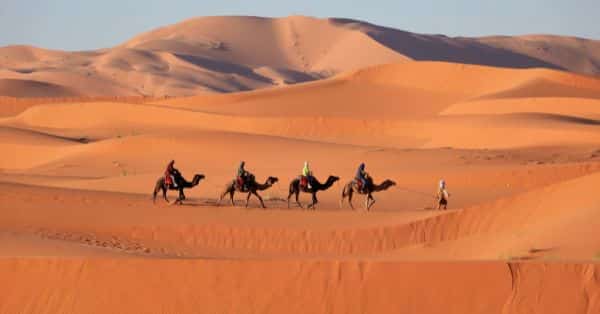
It is the ideal destination for those seeking to experience nomadic life, ride camels across the dunes, and admire some of the clearest, most star-filled skies on Earth.
Beneath the vast dryness of the dunes lies a network of underground aquifers that sustain life in nearby oases. In the past, inhabitants used khettaras, ingenious underground channels that carried water by gravity from the mountains to the desert, allowing palm groves to thrive despite extremely rare rainfall.
A fascinating feature of the dunes of Merzouga is their ability to “sing,” a phenomenon known as the “singing sands.”
When the wind blows with the right intensity or someone slides down a dune, the movement of sand grains produces a deep, vibrating hum that can resemble the sound of an organ or a swarm of bees.
Dades Gorges
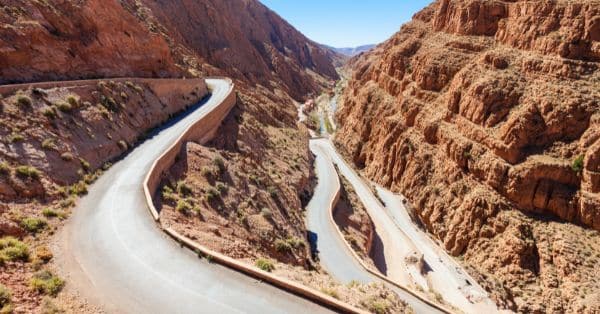
Located in Morocco’s High Atlas, these are among the most unique geological formations, with canyons reaching up to 300 meters in height, creating a striking and sometimes narrow landscape.
The Dades Gorges were formed over millions of years through the erosion of the Dades River, which slowly carved through the limestone of the Atlas Mountains.
This natural process, combined with tectonic activity, created a deep and winding canyon where mountains narrow into impressive vertical walls. Water, though now scarcer, remains the sculptor of this landscape connecting the Atlas to desert routes.
The area is also known for unusual rock formations nicknamed “monkey fingers” and for small Berber villages clinging to the valley walls, where life is shaped by traditional agriculture and extreme adaptation to the environment.
Marrakech, the Red City
Why “Red City”? The nickname comes from the characteristic reddish-ochre color of the walls, houses, and buildings of the medina, due to the earth used in their construction.
Marrakech was founded in 1070 by the Almoravid dynasty as a strategic meeting point between desert trade routes and the Atlas Mountains.
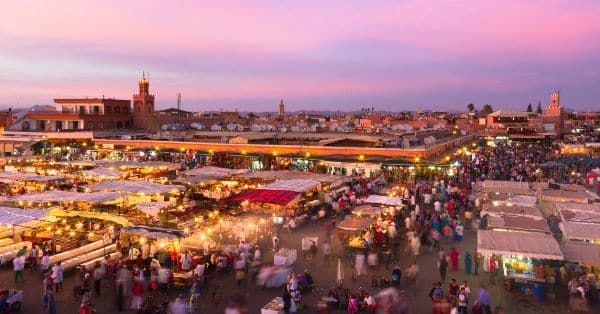
One of the most fascinating aspects of Marrakech is how life revolves around Jemaa el-Fnaa square, a place with many faces.
By day, it serves as a bustling meeting point full of stalls and activity; by night, it transforms into an open-air stage filled with food aromas, traditional music, storytellers, and street performers.
This daily transformation makes it a truly unique place, recognized as Intangible Cultural Heritage of Humanity.
Casablanca
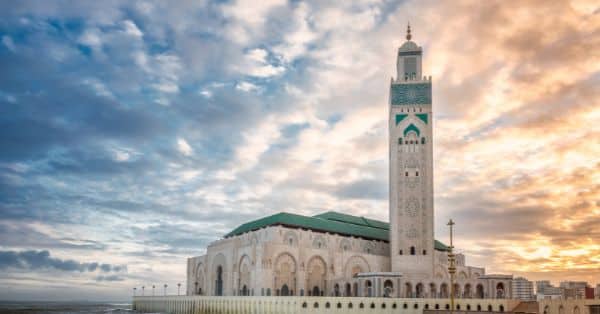
Casablanca is a city of contrasts between modernity and history. One of its most remarkable landmarks is the Hassan II Mosque, one of the largest in the world, built partially over the sea and featuring the tallest minaret in Africa.
Casablanca is Morocco’s great metropolis and the final stop before returning to Tangier.
Its mix of French colonial Art Deco architecture and modern skyscrapers gives it a visual identity very different from the rest of the country.
As the journey’s finale, Casablanca represents the final contrast between tradition and modernity before closing the loop back in the north.
A Journey Lived on Two Wheels
Morocco is not just a destination, it’s an experience felt in every kilometer, in every changing landscape, and in every unexpected contrast.
The best way to discover it is by motorcycle, where the road is not just a means of travel, but an essential part of the journey.
From the roar of the engine crossing the Atlas to the absolute silence of the desert, this route becomes a unique way to connect with the environment, the people, and yourself.
A journey that begins in the north, crosses historic cities, gets lost in labyrinthine medinas, and ends in the vastness of the Sahara, but in reality, it never truly ends… because every curve leaves a lasting mark.
🏍️ Guided Tour
8 days, 2,000 km, from Málaga to the Sahara and back. All restaurant stops selected by our guides. Triumph motorcycles, hotels, and support vehicle included.
🗺️ Self-Guided Tour
Prefer to travel at your own pace? We prepare the route, hotels, and GPX files. You travel independently with our support available by phone.