Pyrenees · On-Road
By Triumph Adventure Spain · 8 min read · Pyrenees, Spain, France
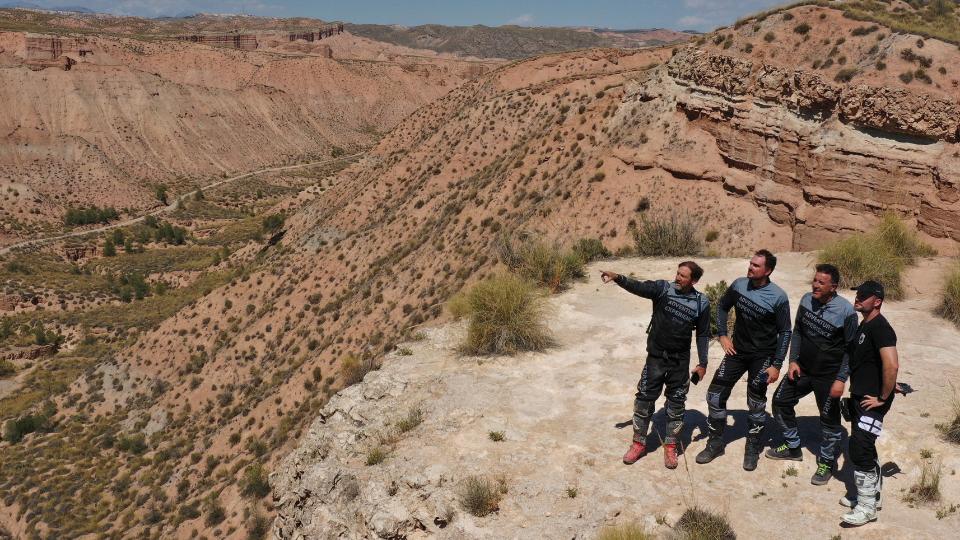
The Pyrenees are not a road. They are four hundred kilometres of mountain range between Spain and France, with more than thirty paved mountain passes, valleys that change language and landscape every twenty kilometres, and tarmac that in some stretches has not seen roadworks since it was first laid. For a motorcycle rider, that is not a problem. That is exactly the plan.
Our Triumph Transpyrenean Tour leaves Barcelona and returns to Barcelona in six days, covering 960 kilometres of the finest riding in the range. But before talking about the tour, it is worth talking about the destination. Because the Pyrenees deserve to be understood before you arrive.
📍 Length: over 400km of mountain range · Highest paved road: 2,408m (Port d’Envalira, Andorra) · Paved passes: over 30 · Best season: May–October
The destination
Why the Pyrenees are the most complete motorcycle destination in Europe
Some motorcycle destinations have good roads. Others have everything — roads, scenery, culture, varied terrain, food, and the possibility of crossing a border without the tarmac changing beneath your wheels. The Pyrenees are the latter.
The range forms the natural border between Spain and France for over 400 kilometres, from the Basque Country to Catalonia. On the Spanish side, the Pyrenees contain the Ordesa and Monte Perdido National Park — declared a UNESCO World Heritage Site — and the Valle de Arán, a geographically unique enclave with an Atlantic climate in the heart of Mediterranean mountain country. On the French side, the Tour de France passes. And in between, Andorra.
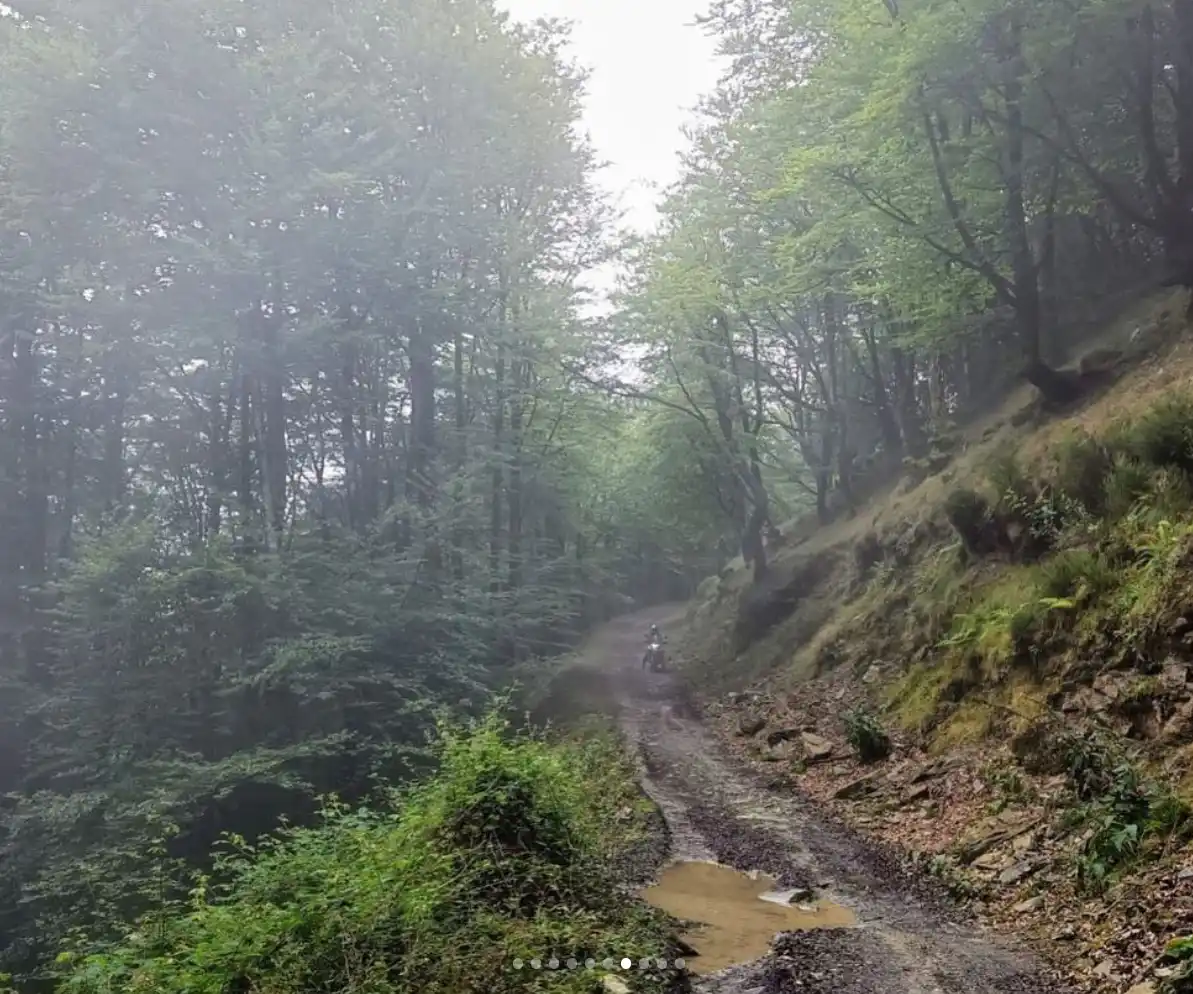
Furthermore, the combination of slopes is unique: the southern face is drier and warmer, with roads that wind through limestone gorges. The northern face is green and humid, with beech forests and passes that drop into French valleys. Two completely different worlds, rideable in a single day.
Ordesa and Monte Perdido National Park
Valle de Arán
Andorra
Tour de France passes
Aragonese Pyrenees
Catalan Pyrenees
The passes
The mountain passes you cannot miss
A mountain pass in the Pyrenees is not the same as one in the Alps. Here the road is narrower, the scenery wilder, and the traffic practically non-existent on weekdays. And the history, in some cases, is of epic proportions.
Col du Tourmalet — 2,115m
The most famous pass in the Tour de France, included in the race route 84 times — more than any other climb. It stands at 2,115 metres and runs for 19km from Luz-Saint-Sauveur, with an average gradient of 7.4%. Riding the Tourmalet on a motorcycle is a different experience to climbing it on a bicycle — without the physical effort, the mind is free to take in the scenery, the corners and the silence between them.
⛰️ Col du Tourmalet · 2,115m · 19km from Luz · Average gradient 7.4% · French Pyrenees
Port de la Bonaigua — 2,072m
In the heart of the Valle de Arán, the C-28 road climbs to the Port de la Bonaigua at 2,072 metres. It is one of the most spectacular passes in the Catalan Pyrenees: the ascent from the south crosses pine forest and opens onto a summit with views over the Valle de Arán that on clear days reach France. The descent towards Baqueira-Beret follows the Garonne river from its source.
⛰️ Port de la Bonaigua · 2,072m · Catalan Pyrenees · Valle de Arán
Puerto de Portalet — 1,794m
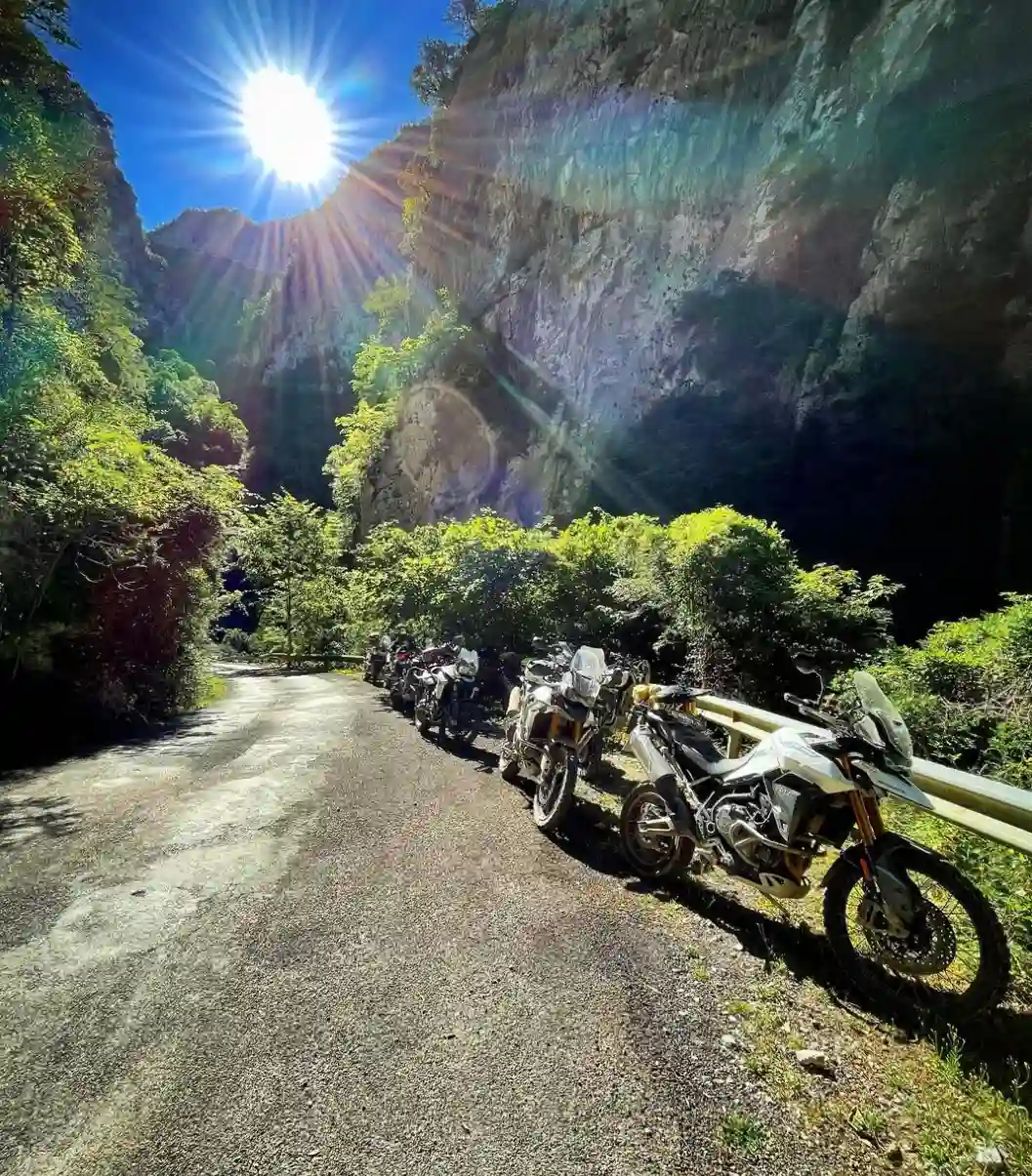
A border pass between Spain and France in the Aragonese Pyrenees, sitting at 1,794 metres. The approach from the Spanish side, through the Valle de Tena, is one of those stretches that appears on lists of the world’s best riding roads: the A-136 winds through a vertical limestone gorge all the way to the summit where Spain and France share a few metres of tarmac.
⛰️ Puerto de Portalet · 1,794m · Spain-France border · Aragonese Pyrenees
Col d’Aubisque — 1,709m
With 47 appearances in the Tour de France, the Col d’Aubisque is the second most visited mountain in the race’s history. The road connecting the Aubisque to the Tourmalet — the famous Cirque des Géants — is one of the most legendary motorcycle routes in Europe. Two mythical passes linked by a high-altitude road that in July can have snow on both sides of the tarmac.
⛰️ Col d’Aubisque · 1,709m · French Pyrenees · 47 Tour de France appearances
The routes
Three routes for riding the Pyrenees by motorcycle
The Transpyrenean: Barcelona to San Sebastián
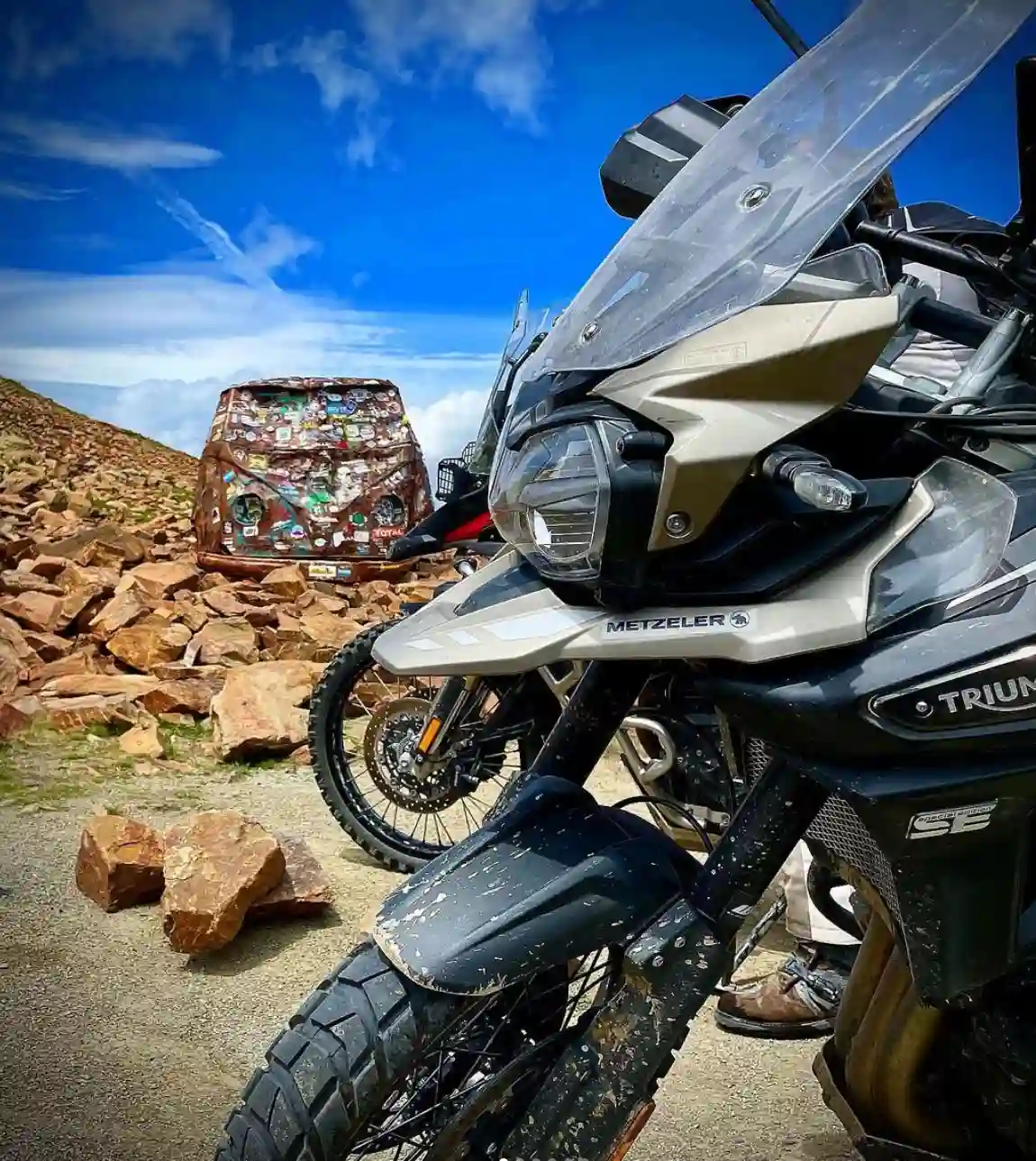
The most epic route. Over 800 kilometres between Barcelona on the Catalan coast and San Sebastián in the Basque Country, through the natural wonders of the Pyrenees and charming towns like Sort, Bielsa and Riglos. This is the route of 30 passes — or more, depending on the line you choose. It needs between 6 and 8 days to ride properly. There is no hurry in the Pyrenees.
The Catalan Pyrenees: Barcelona to the Valle de Arán
The most accessible route from our Barcelona base. It heads north on the C-16, climbs to the Cadí Tunnel, crosses the Cerdanya valley and climbs into the Valle de Arán via the Bonaigua. Three or four days taking in Puigcerdà, Sort, Esterri d’Àneu and the Valle de Arán — one of the most singular corners of the Iberian Peninsula, with its own language (Aranese) and a climate that fits no conventional weather map.
The Aragonese Pyrenees: Ordesa and the central passes
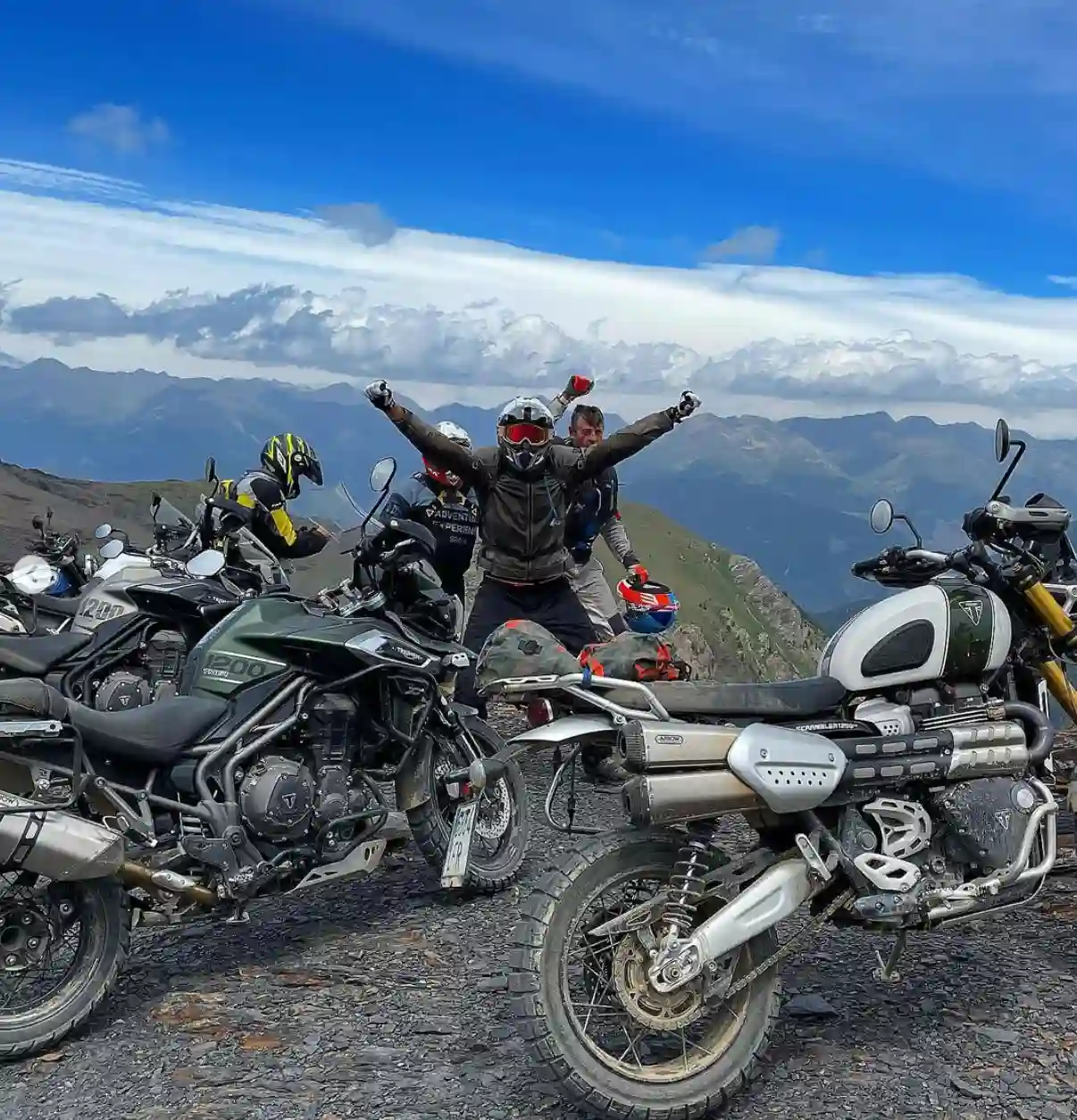
The wildest option. The Ordesa and Monte Perdido National Park, a UNESCO World Heritage Site, surrounds the access roads with vertical rock walls over 1,000 metres high. The Añisclo Canyon, the Ordesa Canyon, the Puerto de Cotefablo, the Puerto de Biescas. None of these names appear in mass tourism brochures. All of them appear in conversations between riders who have done them.
When to go
The Pyrenees riding season: month by month
|
May–June Passes reopen after the snowmelt. Intense green, high river levels, temperatures between 10 and 20°C at altitude. The best window for the Catalan and Aragonese Pyrenees before summer tourism arrives. |
July–August Peak season. Passes are in their best condition, but valley traffic can be heavy at weekends. Riding on weekdays and starting early makes a significant difference. Pleasant temperatures at altitude — 15–22°C. |
|
September–October The best window of the year. No tourists, autumn colours, completely empty roads. Most passes stay open until November. The September light in the Pyrenean valleys is extraordinary. |
November–April Most high passes close due to snow. Some stretches of the eastern Pyrenees remain open, but this is not a recommended season for a complete route. |
The tour
The Triumph Transpyrenean Tour: 6 days, 960km, from Barcelona
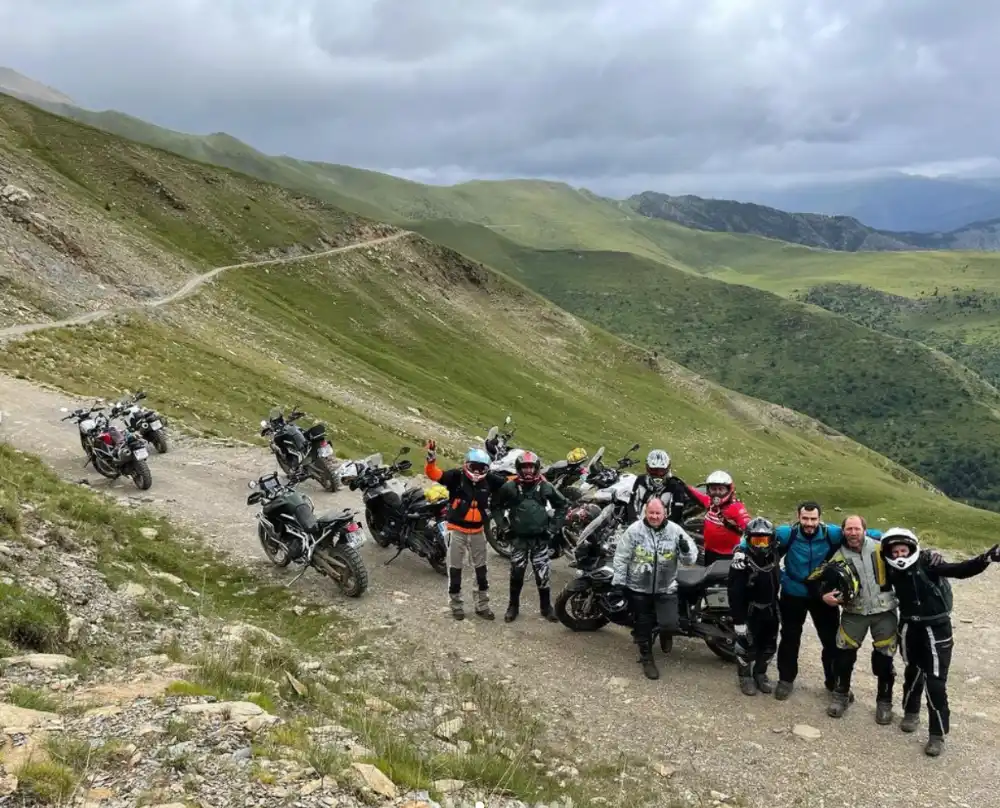
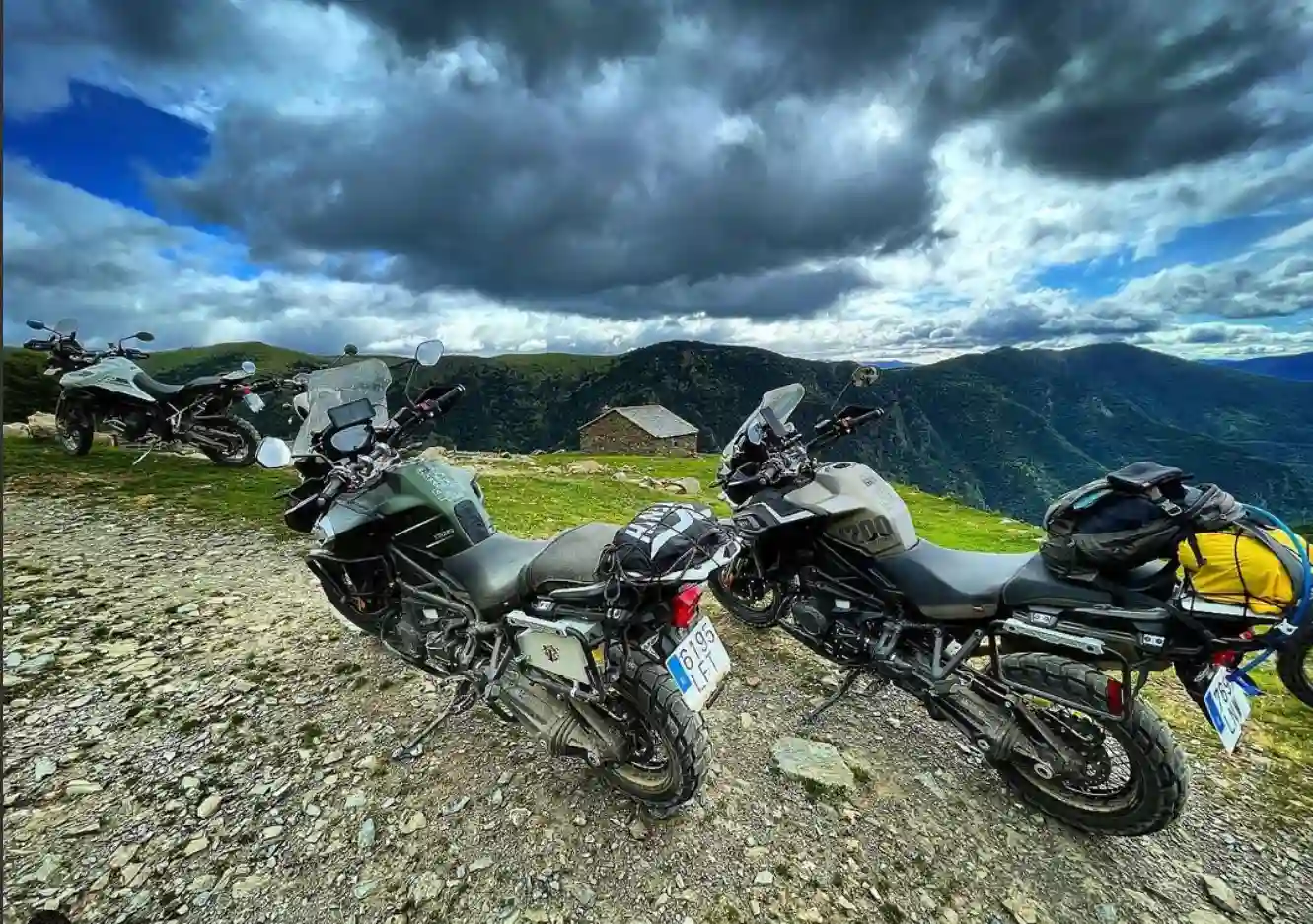
Our guided Pyrenees tour covers 960 kilometres in six days, departing and returning to Barcelona. It is a 100% on-road tour — no dirt, all the power of Pyrenean tarmac. The itinerary takes in the most legendary passes in the range, accommodation selected at the best points along the route, and a Triumph-certified guide who knows every corner of the road.
🏍️ 6 days · 960km · 100% on-road · Departs Barcelona · Triumph-certified guide · Limited groups
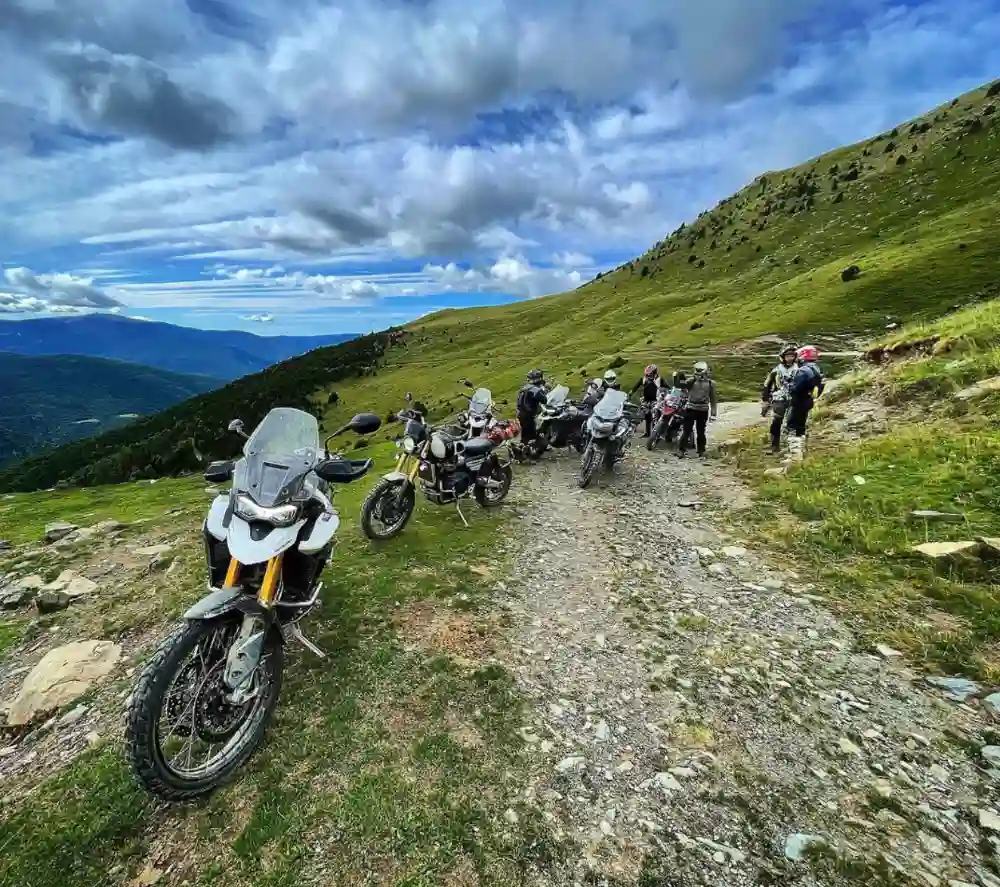
“Six days in the Pyrenees with Triumph Adventure Spain. A different road every day, somewhere you didn’t expect every night. On day three, climbing the Tourmalet, I understood why people do this tour again and again.”
— Client, Triumph Transpyrenean Tour 2025
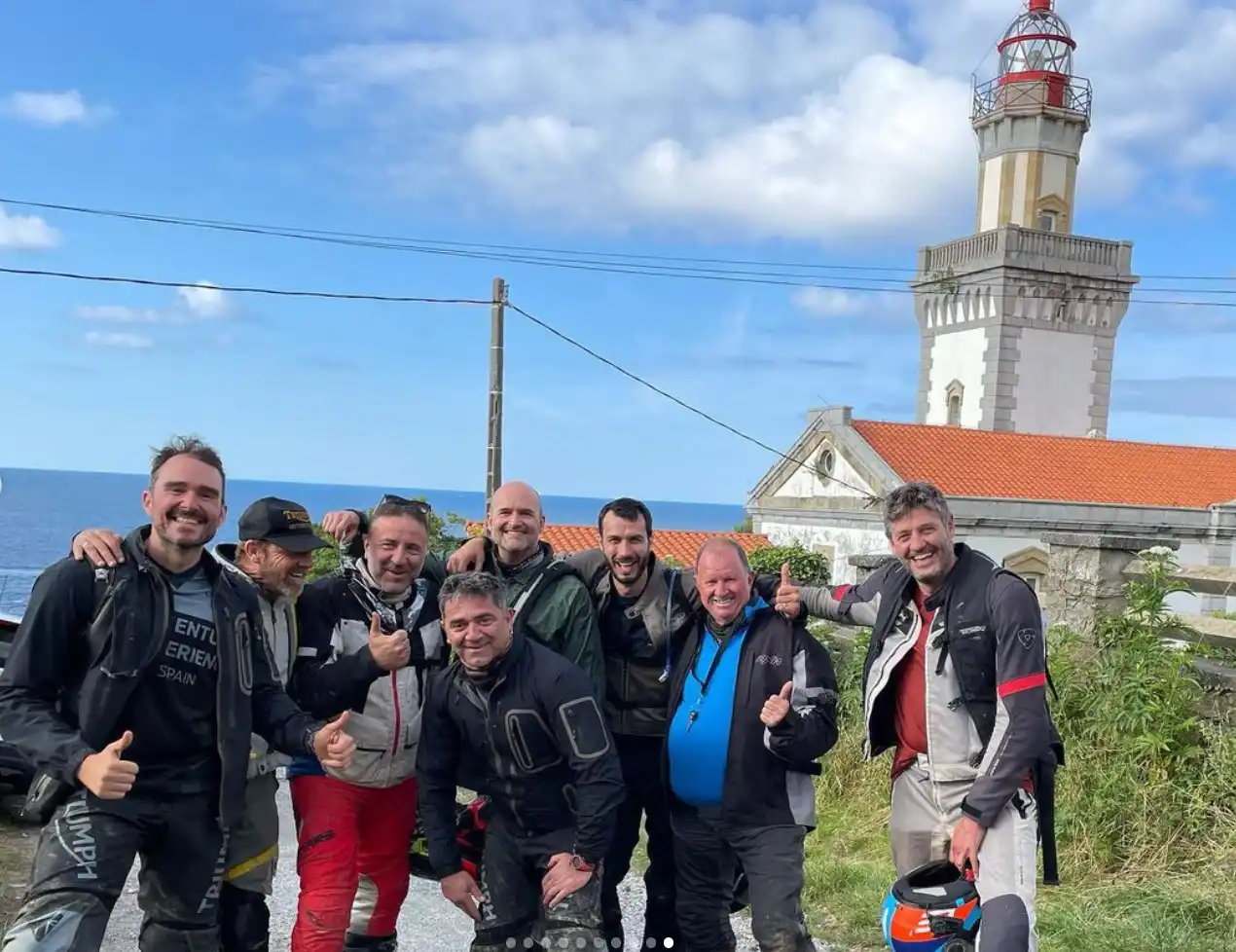
Guided tour · Barcelona
Triumph Transpyrenean Tour
6 days · 960km · 100% on-road · Triumph-certified guide · Limited groups · From €1,650/person
FAQ
Common questions about motorcycle tours in the Pyrenees
When is the best time to ride the Pyrenees by motorcycle?
September and October are the best months — no tourists, autumn colours and empty roads. May and June are also excellent, with passes freshly reopened and the landscape at its greenest. July and August are rideable but busier in the valleys. High passes close between November and April due to snow.
How many days do I need to ride the Pyrenees by motorcycle?
For a complete end-to-end route (the Transpyrenean, over 800km), allow 6 to 8 days. For the Catalan or Aragonese Pyrenees independently, 3 or 4 days are sufficient. Our Triumph Transpyrenean Tour covers 960km in 6 days departing from Barcelona.
What is the highest paved mountain pass in the Pyrenees?
The highest paved pass in the Pyrenees is the Port d’Envalira in Andorra, at 2,408 metres. On the French side, the Col du Tourmalet is the most famous, at 2,115 metres with a 19km climb from Luz-Saint-Sauveur. On the Spanish side, the Port de la Bonaigua (2,072m) is one of the most spectacular in the Catalan Pyrenees.
Can I ride the Pyrenees on a hire motorcycle?
Yes. From our Barcelona base we offer Triumph motorcycle hire for Pyrenees routes. The recommended models for mountain riding are the Tiger 900 Rally Pro and Tiger 1200 Rally Pro — reinforced suspension and mixed tyres for Pyrenean roads. Side cases are included at no extra cost.
Are the Pyrenees suitable for beginner motorcycle riders?
The Pyrenees have roads for all levels. Valley stretches and national park access roads are conventional roads, technically accessible. High mountain passes — Tourmalet, Aubisque, Portalet — require experience with corners and gradient changes. For the Triumph Transpyrenean Tour, at least 2 years of riding experience is recommended.
Can I cross into France during a Pyrenees motorcycle route?
Yes. Several passes in the range are border crossings between Spain and France — the Portalet, the Somport, the Puymorens. No special formalities are required within the Schengen Area. If you hire the motorcycle with us, let us know at the time of booking so we can arrange the vehicle documentation.